 |
|
 |
Music and electronics have both played important roles in Nick’s life from an early age. He
takes great delight in a variety of musical genres, listening during the day to a computer-based
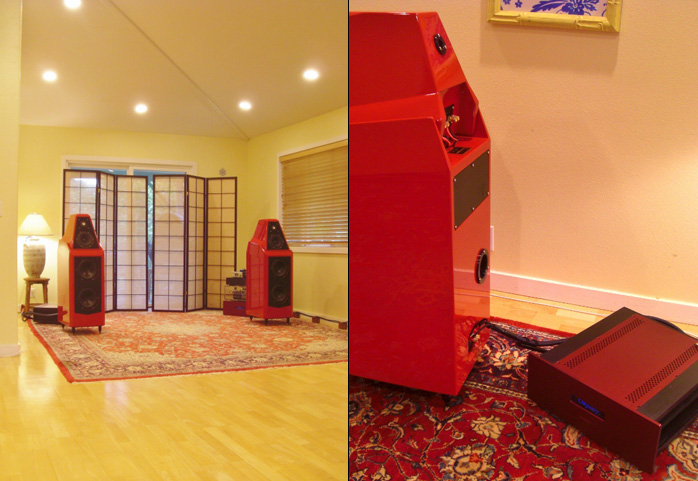
office system with a second reference system in the living room for evenings. Nicholas is a
native New Englander and spent countless enjoyable hours in Symphony Hall with the Boston
Symphony Orchestra and Handel and Haydn Society.
|
 |
However, the continuing prospect of six months a year enduring cold and darkness plus the
sale of a high-tech scientific image-processing startup prompted relocation to Hawaii.
Eventually he landed on Maui where the music scene is quite lively. Willie Nelson lives there
part-time, sometimes materializing in North Shore hang-outs unannounced. And Maui’s
attractions bring in the likes of Björk, Aerosmith, Eddie Vedder and many others looking for
some R&R at the end of a long tour.
|
 |
 |
As a balance to his current 'real' work in knowledge-visualization software, Nick also enjoys
writing for the consumer electronics press. This endeavor is focused on helping the enthusiast
community understand new technologies and product categories starting with HDTV in the
original incarnation of The Perfect Vision back in 1987 ("HDTV is just around the corner").
These efforts continued to evolve with extensive coverage of emerging digital media
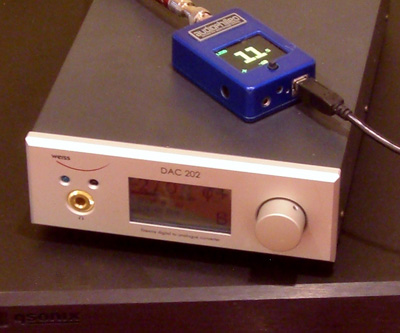
technologies including the first digital music server review in the The Absolute Sound, the Linn
Kivor. Featuring a computer-based product in TAS in 2004 raised quite a few eyebrows but the
editor Robert Harley had his eye on the future. In the past few years, TAS, TPV and Mix have
published 20+ columns, equipment reviews, articles and other contributions along these lines.
Nick also enjoys the usual Maui enthusiasms of world-class yoga, meditation, swimming and
attempting to train a pair of parrots.
|
|
Nicholas Bedworth:
Representative professional research and development activities
1. High-resolution 4096 x 4096 x 24-bit analogue/digital conversion of high-energy particle-scattering imagery with three-dimension reconstruction; measurement of
vertices and calculation of particle momentum with computer-graphic visualization. -
Brookhaven National Laboratory, Upton, NY; and Yale University, New Haven, CT.
2. Electrophysiological investigation of sensory neurons and cybernetic modeling of
transfer functions; software-driven signal analysis - Sonderforschungsbereich für
Kybernetik and Max Planck Gesellschaft, München, BRD.
3. Multichannel electroencephalographic analysis with real-time Fast Fourier Transform -
University of California, Los Angeles, CA.
4. High-speed image acquisition subsystems for computed axial-tomographic devices for
industrial and medical application including multi-ported memory; narrow-aperture
sample-and-hold amplification with low-jitter analog/digital sample
conversion. - American Science and Engineering, Cambridge, MA.
5. Low-latency 100 nanosecond microprocessor writable control store and firmware -
Quadex Technology, Cambridge, MA.
6. Ultra-low dosage X-ray digital radiography scanner systems -American Science and
Engineering.
7. Narrow-band spectroscopic analysis of hyper-sonic combustion flow fields using
nanosecond-scale pulsed dye laser illumination and image intensification -University of
Illinois, Champaign-Urbana, IL; Georgia Tech, Atlanta, GA; Volvo, Goteborg, Sweden;
University of California, Berkeley, Berkeley, CA.
8. Real-time Fast Fourier Transform image processing software for phase-contrast
microscopy -Mayo Clinic, Rochester, MN, and University of California, Los Angeles, CA.
9. Standing acoustic-wave optical signal processing apparatus, 10MHz sampling
rate, 24+bit quantization -. Naval Research Laboratory, Washington, D.C.
10. High-phase resolution image scanning and networked distribution technology -Bell and
Howell Corporation, Wooster, OH. |
 |
|
