|
|
|
|
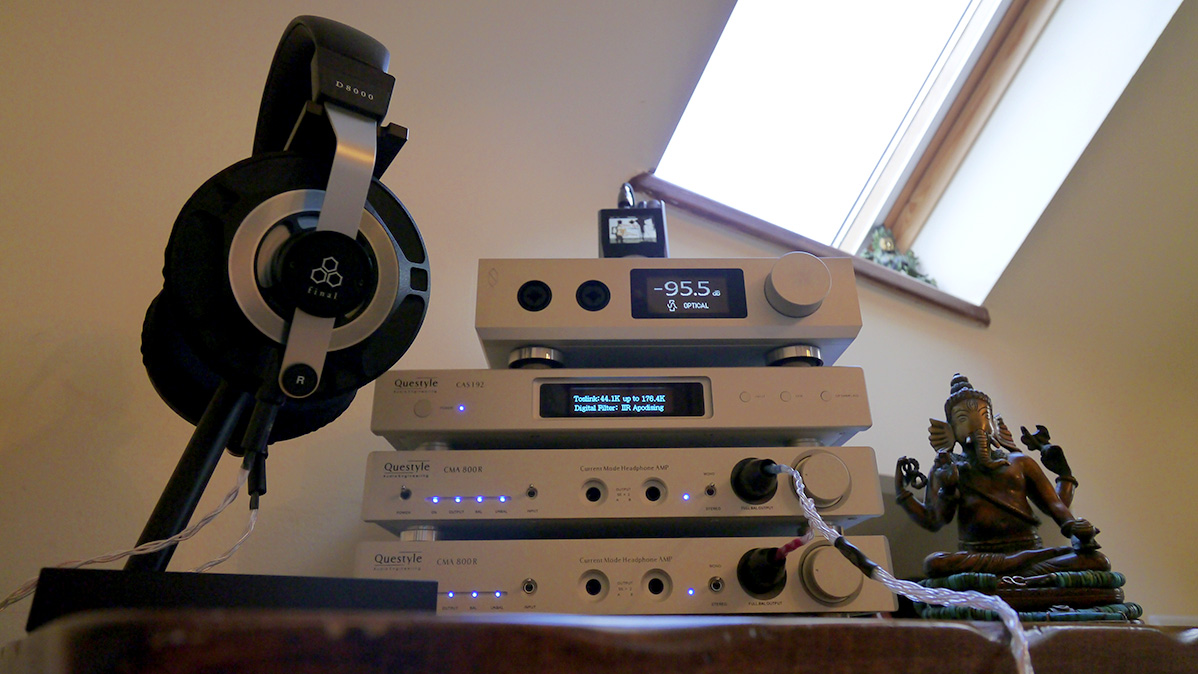
Shifty cables? In my Susvara review, HifiMan's Fang Bian had opined that "aftermarket suppliers tend to approach headphone cable like speaker cable, leading to more massive multi-strand constructions. Those boost the bass and lower midrange but due to far higher capacitance, screw up the treble." I don't know whether such electrical parameters apply to Final's. Sonically it was simply clear that versus the far thinner Sonorous X cable and our thin twin XLR ALO leash, their fat cables had a serious bass-head effect. That conjured up déjà vu of our pre-Fazor Audeze LCD-2 though with superior treble and more bass control. For sheer LF power, extension and club-ready whomp, the Final was elephantine like the LCD. In my book, that played an overt bottom-up game: rich, chunky and organic but also suggestive of untapped HF room. Suggestion turned proof with the 3.5mm Sonorous cable. Like an EQ slider, it moved up the tonal centre. Bass proportions normalized. So did slightly humid weather conditions. On top, the minor cloud cover dispersed. But that wasn't the end. Enter Ken Ball's cryo-treated silver cable plus balanced drive off Questyle mono amps. Without raising the sonic gravity's centre any more, it still clearly finessed the treble. Detail separation peaked. This likely came from the amps' increased current drive and/or damping. To my ears, said combo showed the D8000 to very best effect to form the basis for my ultimate conclusion. By inference, the thinking reader knows that the just departed Feliks Audio Euforia OTL tube amp + thick stock cable + D8000 would have been too dark, heavy and reverberant: all chocolate, no espresso. Ergo, any question as to what the D8000 sounds like will first have to stipulate what cable is used. It's a chameleon thing. |
|
|
In my personal end game, the D8000 completely and utterly transcended the HF opacity of the Oppo planars, cheap Fostex and the smaller treble hoodedness of early Audeze (early because I haven't heard the LCD-3 and 4). But on personality, it retained some Audeze traits. This prioritizes body and weight over their opposite. That I call ultimate see-thru-ity. It's what distinguishes a ghost from a blood'n'bones being which blocks the light. The spectre lets it pass clean through. By definition then, extreme transparency has to go lighter on density and mass. Ultimate body must clump together and undermine fine separation. Hifi on both speakers and headphones is really a strange trick. It wants to project instruments, voices plus their owners when in fact, none are really present. Some listeners favour a believable feeling presentation which demands very high image density to come off. Others, particularly those 'trained' in audiophilia, wish to go walkabout in the virtual stage to map all its nooks and crannies. That demands ever more transparency and specificity. In those terms, the D8000 expressed clear and present qualities of the feeling/embodiment class to be a bit less about the most spectacular soundstaging. But, critically, because for a planar its top end was unusually well developed and lucid, it clearly didn't rely on orthodynamic darkness to produce its body. That placed it somewhere between my Audeze and HifiMan acquaintances. Split the bill then? Or closer to one than the other? If so, which?
|
|
Let's get more markers vis-à-vis three important competitors I had on hand.
|
|
|
|
|
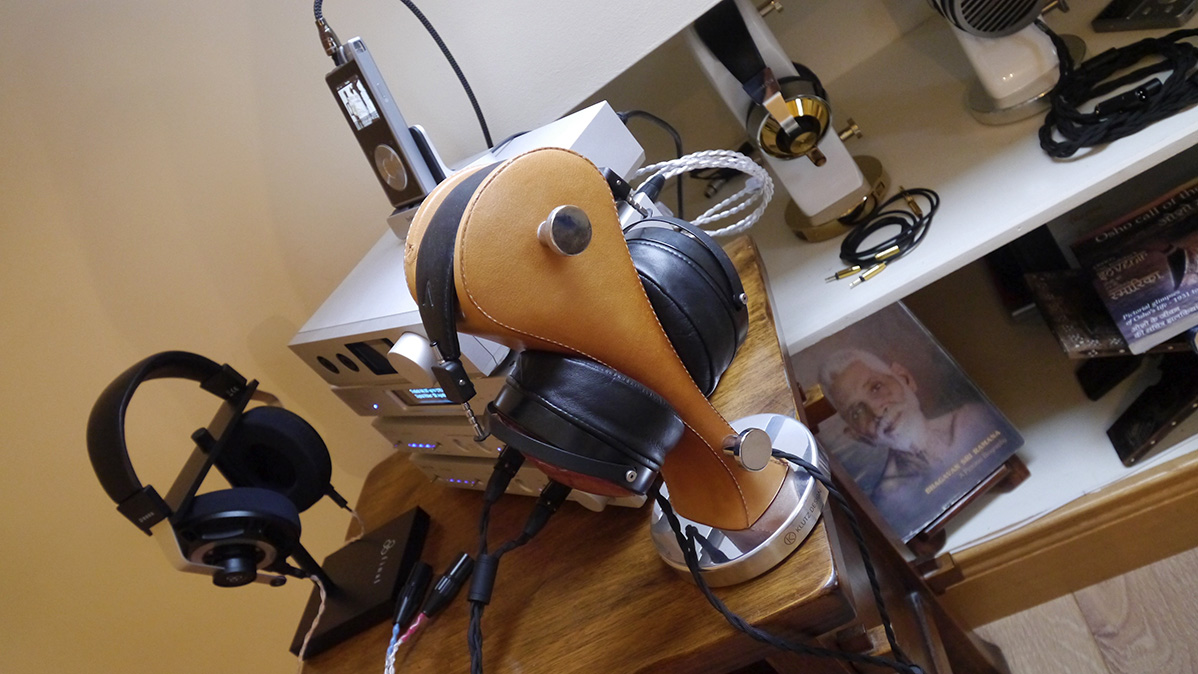
Where many planars are open-backed, the Audeze LCD-XC are closed. Going in, one doesn't expect the widest or airiest of headstages. One does envision powerful punchy bass which pushes back as it were; and more or less reflection-derived warmth where a diaphragm encounters the immediate solid barrier of its sealed cup. Fitted with a Polish Forza Audio Works Noir MkII leash, the XC was decidedly more forward in the lower midrange where it could exhibit real bite on plucked strings. Its upper bass too seemed dialled up a bit to give it a pushier personality. The Final was more linear and laid back. Its mid and low bass were more intelligible by lacking the Audeze bump. The presence region was less forward to eliminate the occasional metallic gleam of the Californians. Perhaps because of their more contoured voicing, the latter also staged more central whilst the Japanese felt wider. Again due to their clear voicing, the Audeze at first suggested a stronger colour index. It didn't take long though to hear it like a maxed-out contrast ratio in your local electronic emporium's television alley. It has grass go lime green. It's punchy but oversaturated. Disney World unnatural. Sonically the Audeze was selectively focused and uneven. It created a special effect. By contrast, the Final didn't feel EQ'd. It behaved less showy and as such, more natural and easy. Its treble was entirely free of grain whilst the Audeze was grittier and glossier. Finally Final's wear comfort was higher despite being far from a lightweight contraption.
|
|
|
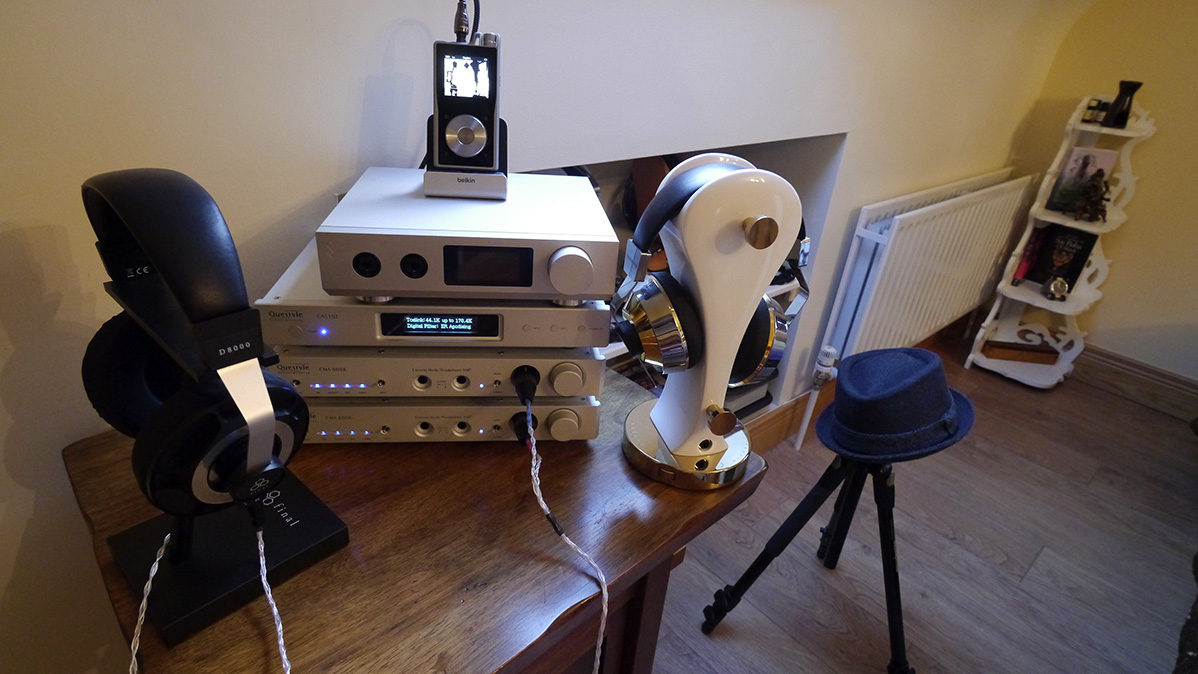
Against Susvara. On tonal balance and linearity, this was a surprisingly tight race. I said surprising because Susvara is the most 'electrostatic' of planars I've yet heard: fast, lean, lucid, transparent and slightly cool. The key differences were more broadband weightiness and density for the Final versus wider airier staging for the HifiMan. Whilst seriously less efficient, on potent amps like the mono Questyles or Bakoon AMP-12R, Susvara is capable of very powerful low bass. Here it kept pace with the clearly capable Japanese. Its wider staging and even more open treble simply conveyed an impression of greater speed and less fullness. The Final felt slightly slower but also fuller. Just so, unlike the Audeze, this juxtaposition didn't call the D8000 intrinsically more coloured or compressed. Returning to the earlier splitting of the bill then, this showed how the D8000 didn't sit halfway between the LCD and Susvara. It sat a lot closer to the HifiMan aesthetic. Physically of course, Susvara is lighter but financially nearly double to become a real heavy. Then it requires a properly powerful amp where the D8000 will plug straight into the Questyle QP-1R portable below. Given something of Questyle or COS Engineering calibre and this particular balanced cable from Portland's Ken Ball, I was frankly a little taken aback by how essentially on par these two statement headphones behaved. Yes there were minor differences but nothing of the delta which had played out against the Audeze. This segued straight into my biggest curiosity. How would the D8000 fare against the stablemate Sonorous X on the very same balanced cable and Questyle electronics stack?
|
 |
|
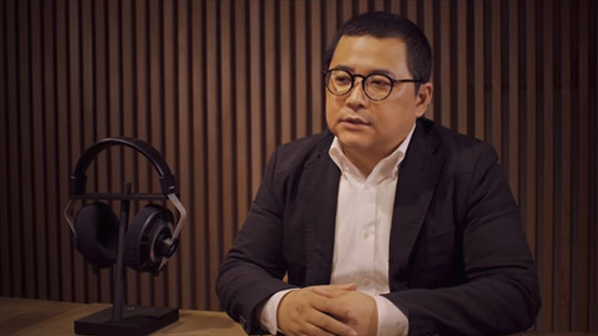
Final squared: dynamic vs. planar. By descending from the same mind and ear set of a shared design team under company head Mitsuru Hosoo [right], the D8000 and Sonorous X as two best efforts in their respective categories had to share if not design DNA then certainly a sonic aesthetic. Yet Final have also stated that their planar project overcomes certain shortcomings of traditional dynamic designs. If so, how/where would the D8000 overshadow the X? And would the latter retain any advantages?
The planar staged wider and was texturally more matte. The sealed dynamic acted more intense on even minor voltage swings aka microdynamics. On colour pop it too was the more energetic. Texturally it had the higher glass-screen gloss. This very focused potency felt slightly stronger between the ears and a bit less so at them. The D8000 projected across the headstage at even strength to sidestep the X's somewhat elevated centre fill. This evenness added itself to the sense of actually greater width. On gestalt, the Sonorous felt clearly more muscular, hence sprung. The D8000 was more relaxed and easy. The dynamic headphone reminded me of the Gryphon Diablo integrated. That's all about vigorous dynamics and high-pressure intensity. Contrasted to the D8000, one would become aware of a certain activity; a state of underlying tension if you will. Again the word 'ease' arises to describe the Japanese planar. But it's also fair to say that coming at this from the other end, the Sonorous X could be called the more exciting or driven; slightly inebriated and extrovert versus the D8000's sober calm.
|
|
|
It's very important to reiterate that this did not reflect the stock cable tuning. That redressed my readings towards bass, thickness and warmth. I simply felt that our balanced far thinner cable had superior detail, better treble and an altogether more natural—in fact admirably neutral—tonal balance with higher speed and more insight. Dialled in that fashion, I really couldn't call either Final superior; or more, the planar as a repair man for any shortcomings of their top full-size dynamic. I'd merely assign slightly different personalities. I'd call the Sonorous X the hotter more impulsive temperament, the D8000 mellower and rather more relaxed. Neither suffered the closed-in sensation of a typical sealed design even when coming directly off a fully open-backed competitor like the HE-1000/Susvara or Sennheiser HD800. Neither exhibited a perceivable contour like for example the Sonorous VI with its hybrid balanced armature/dynamic driver array which spotlights the upper mid/treble range. In short, either model is an attempt at a standardized linear response like a first-class active studio monitor prior to personalized EQ. Differences or remains of personality/character thus don't really play out in the frequency response domain. But they still do in areas like image density, colour saturation and dynamic contrast.
|
 |
Wrap. Built very well though the minor cloth wrinkles distract a bit from visual perfection. Far more comfortable than the raw weight spec would suggest. Easy to drive even off a portable player. A well-controlled bass head with the stock cable where it comes off like an improved v1 Audeze LCD-2 with more HF and superior damping. Capable of rather higher resolution, far greater linearity and superior treble already with the thin Sonorous X cable. Still more gains were to be had with our braided/twisted ALO in balanced drive which stood in for a custom aftermarket wire. With it, Final's first planar proved to be a very refined, highly advanced and sophisticated addition to the growing choices of planarmagnetic flagship headphones. It exploits openly documented new solutions executed at perfectionist Japanese standards. It's a template for future lower-priced models and one extremist costlier version. It's a bona fide contribution to furthering the art of headphone design. That alone deserves serious applause. It shows great ambition and commitment.
But it's far more than difference for difference's sake. Final's D8000 demonstrates great freedom from spatial and tonal compression plus lack of excess warmth. It shows how a planar may compete with top dynamics on treble reach and sophistication to no longer present as more opaque and clouded or electrostatically weak in the bass. Most importantly, it shows just how terrifically appealing a neutral rather than voiced tuning can be. Here the result isn't clinically flatlined or a sterile just-the-facts-ma'm affair. It's deeply immersive wide-bandwidth high-resolution encounter with muse music. If you fancy her most in modern bass-heavy close-mic'd productions, stick with the warmer fulsome bassy voicing of the thick stock cabling. If you favour a linear response with rather more developed upper ranges and resolution, use another cable and change perspective. Like a proper high-performance design, Final's first planar is very responsive to such changes. The unexpected stylish metal stand rather than travel bag then dots the final 'i'. Who'd wear such an expensive big headphone on the tube? This one really belongs in the home with top calibre electronics to fully tap their inherent potential. There's more here than first meets the ear. My one recommendation thus is to sample these not exclusively with just the included cables. What you'll prefer in the end I can't predict. But you ought to know just how much shift potential there is to make a properly informed decision about which gear you want to drive in. For me the sonic difference wasn't minor. Hence my reviewer's response evolved from "aha, okay, interesting" to "wow, now that is impressive reference stuff". |
|
 |
|

|
|
|

|
|