 |
|
|
In use, don't think you've been had when a flick of the power mains means nothing happens. For a few seconds, the circuit will ramp up. During that time, not even the green power light deigns to come on. Our Swiss do thing differently. The orange source light doubles as signal lock which won't come on until there's actual voltage knocking at the selected input; and as confirmation for remote commands where it flashes. Perfectly minimalist. As such, I had to give a good think on how to review it. I needed a source which outputs on both analog and digital. My iMac doesn't do proper analog. None of my converters output digital. Questyle's QP1R to the rescue. At €899 and perched on a €30 Belkin dock for 24/7 play at constant charge, it does Toslink and 3.5mm analog out, with a menu option for fixed gain in latter mode; seemed priced in tune with Job's value proposition; and was in tune also on minimalist no-nonsense appeal. On two 120GB micro SD cards plus 64GB of flash memory, it currently holds 5'000 AIFF tracks at assorted 16/44.1-and-up resolution.
|
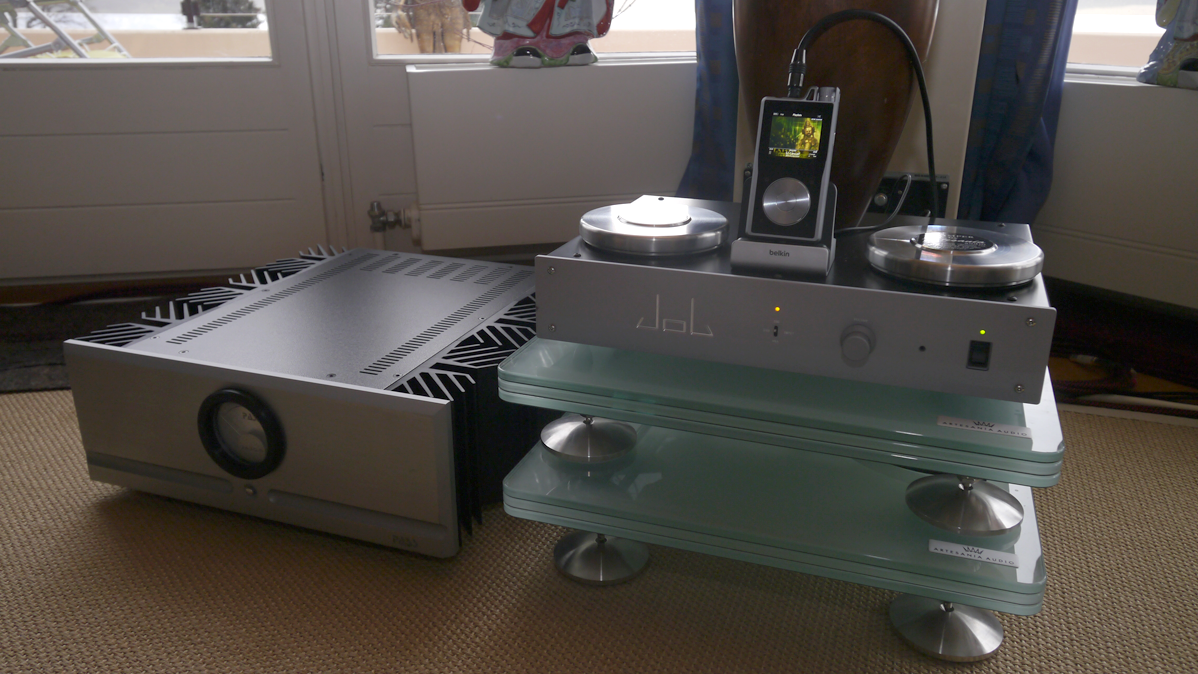 |
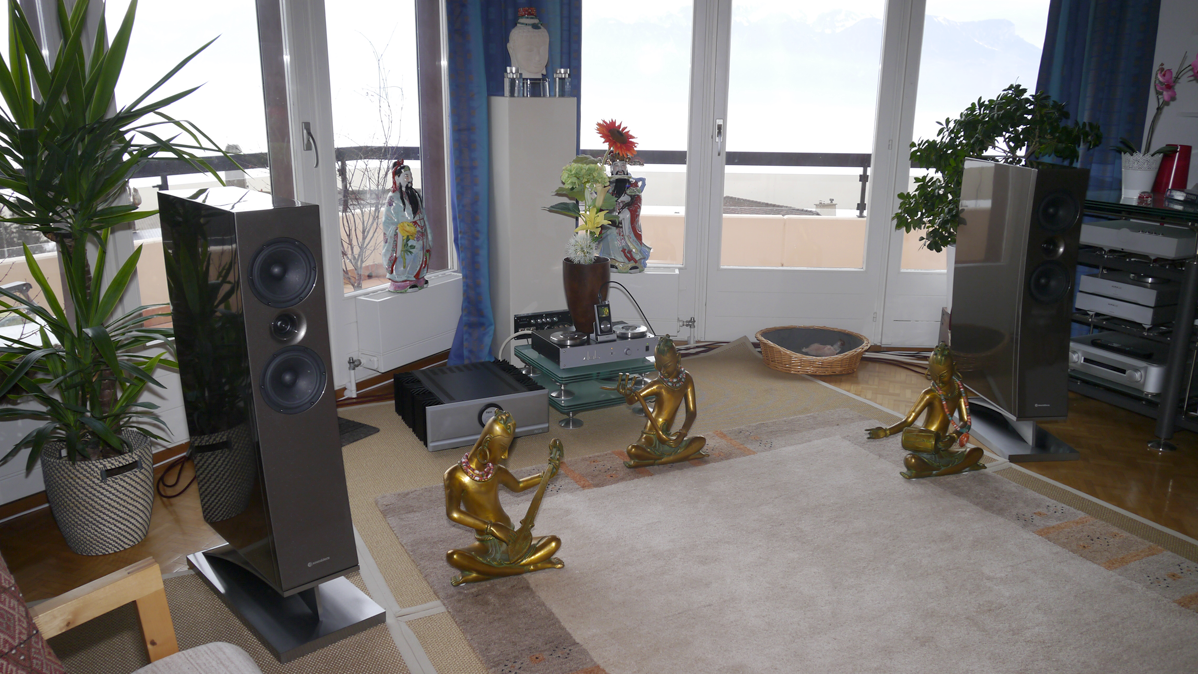
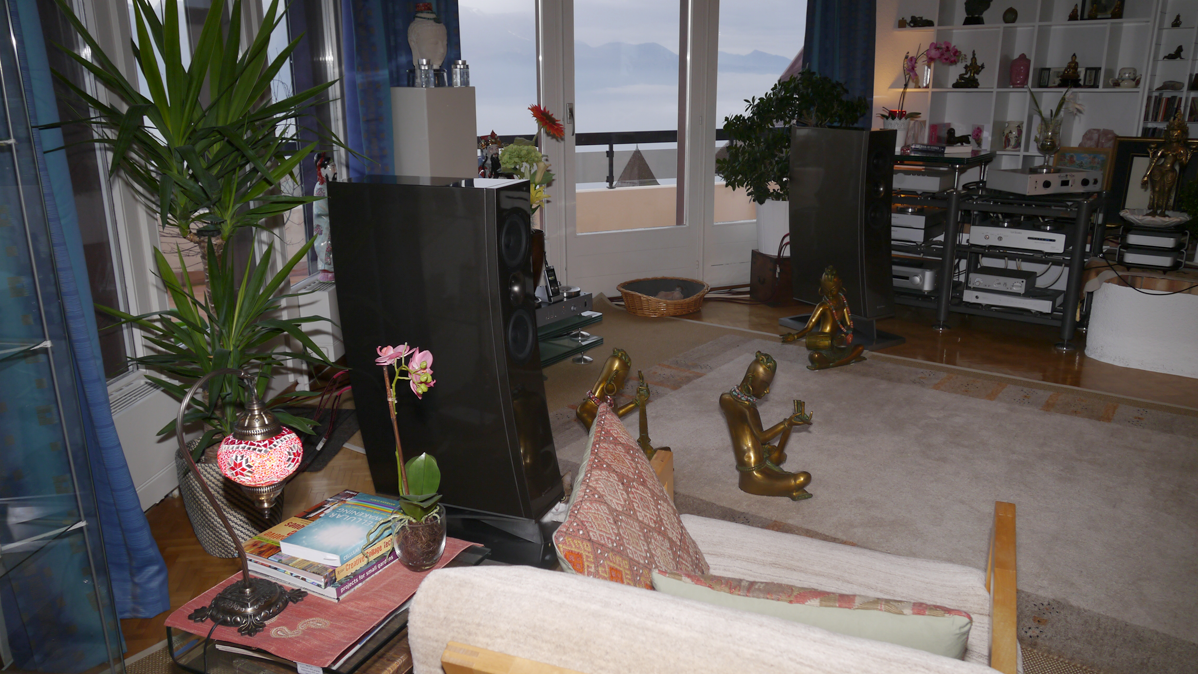
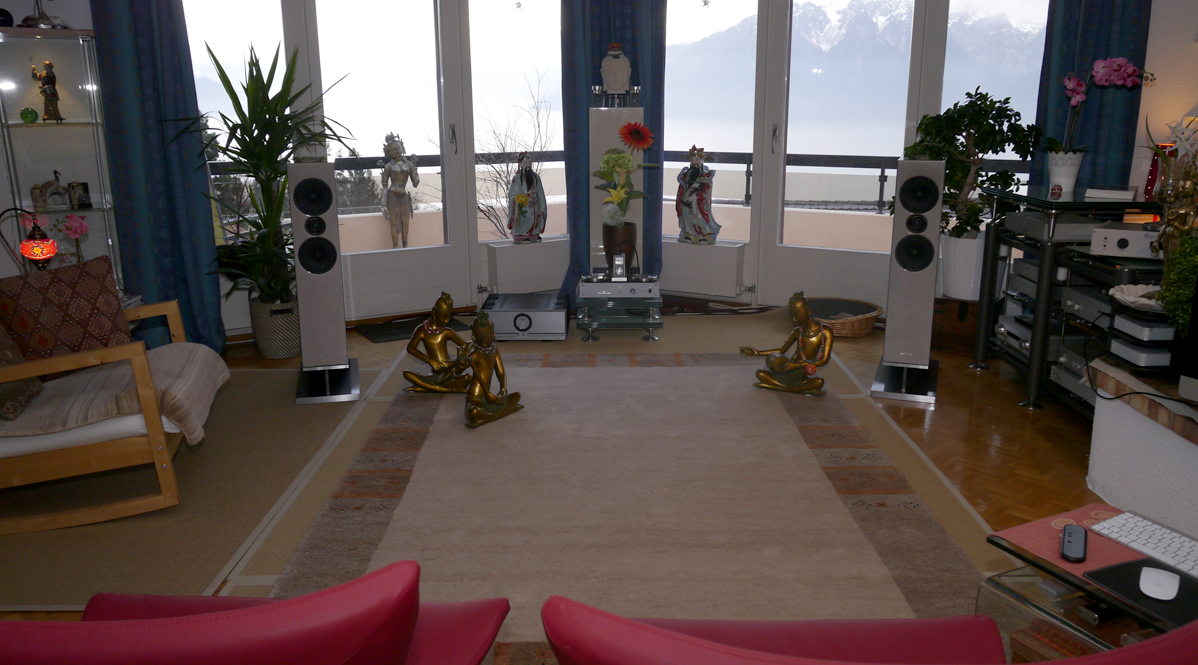
I pigged out a bit on the speakers however, our €8'000 pair of Polish Sounddeco Sigma 2 floorstanders. That's because their top SB Acoustics Satori drivers of cellulose 'n' silk mirror what Goldmund use for their own speakers.
With mature reach to 30Hz, this phase-compensated 1st-order d'Appolito two-way had the dynamic and bandwidth potential to dig into the INT's can do. As the photos on Artesania Audio's stacked amp stands show, this latest Job expanded laterally to now be a full-size no longer 3/4th affair. So yes, it's bigger than a Job 225. It's also got taller soft-nosed footers with more squish than before. This makes for presumably superior mechanical decoupling. Delivered with RCA shorting plugs installed, I left those in for digital mode.
|
 |
The perhaps most gotcha middle-finger salute Job allow themselves occurred at subdued levels. Here digital volume often gets lossy, pale and wint'ry white: suckatacious as a younger nephew once called something disagreeable. I don't think funkatacious is proper grammar police either but here it does convey righteous attitude. The INT simply kills it at cozy ambient levels where other kit still snoozes with crusty gunk in its eyes, posh resistor-ladder controls be damned. Clearly Goldmund knew a thing or two when they decided that this deck would do attenuation digitally. Case closed.
|
|
|
|
|
Closed also are speculations on how much Goldmund's converter stage contributes to the overall shift in Job's signature sound. The D/A converter can't be circumvented. Any claims that the revised amplifier topology thus has nothing to do with these changes; or everything; or perhaps just a bit...they are purely academic. Meanwhile very much down to earth obvious is how the sound has warmed and mellowed by a few degree. It's like a premium spirit. It starts out with more of a bite. 10 or 20 years later if for a hefty surcharge, it shows more lingering complexity, with flavours absorbed from wooden casks. Alas—commiserations to current 225 owners, sniff—no such hefty surcharge applies. Not only does the INT pile on functionality hence value over the Job 225, it has even 'aged' its sonics. Completely for free. Flagship antics? What else to call this?
|
 |
Logical assumptions that a cheap li'l DAC thrown into this box would be destined to go on sonic hunger strike—since price didn't budge, how could the DAC possibly be anything but ultra mega budgetarian?—simply fall on deaf ears. The secret to such insolent success must be encoded in the capitalized rendering of the INTegrated. It's all about smartly effective integration taking full control to wrest superior results from greater simplicity. It'll come off as somewhat of an insult to those who spent more, 'achieved' greater complexity and believed that their mix'n'match approach knew best. This component puts the fat screws to such puny notions. The results here are perfectly contrarious to what really are perfectly reasonable if not very high expectations. It's a downside-up matter all around. Digital volume isn't a problem. The budget DAC isn't a problem. Lack of conventional heat sinks isn't a problem. In use, I never got the casing beyond modestly warm. Of course I didn't tow a horse trailer uphill either to complain that a compact 4-cylinder engine overheated. If someone picked a nasty low-impedance load, played too loud and then bitched that the amp got hot... well, they'd only have their own ignorance to blame. Right tool for the job and all that. How about going in analog to deal with one redundant layer of A/D conversion? Would that be an actual problem beyond conceptual inelegance and breaching purist idealism?
|
 |
|
 |
|

|

|
|
