|
|
|
|
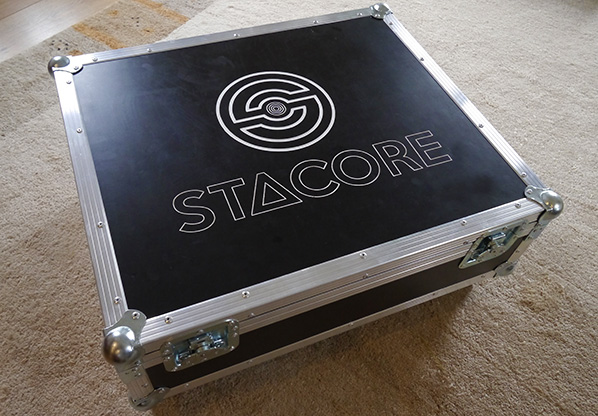
The package. At right we see the serious delivery flight case with three stout aluminium bars below to allow a fork lift or pallet jack to reach underneath; not relevant with a white van sans lift gate of course.
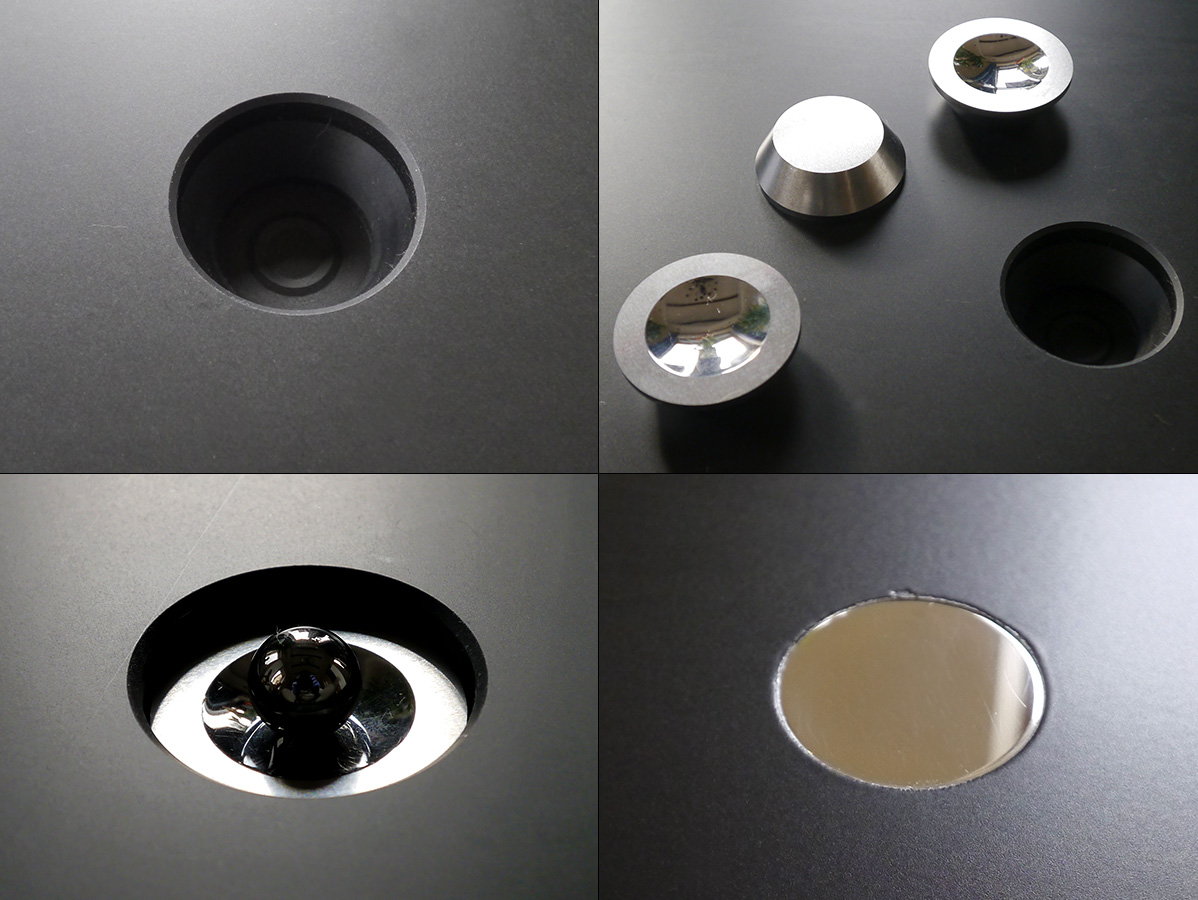
Divided by thick high-density foam, the inside revealed the floating platform with its three flat mirror races on the underside; three drop-in concave races and three matching ball bearings in lateral recesses; and at ground zero the plinth containing the guts; plus four blue plastic gloves.
All parts were heavily shrink-wrapped which, given particularly the weight of the base, made for some interesting unpeeling. Once I'd manoeuvred the latter into position so its two ball bearings faced the seat (the Pass Labs XA-30.8's heavy transformer is in the front), it was time to mount the roller-ball platform.
Being of identical footprint as the base and with a necessary recess between both, alignment proved child's play and the first attempt was a go. It was unexpected to watch just how long the now shimmying platform would take to settle down to zero visible movement - many many seconds!
In the next assemblage, we see, left to right, top to bottom, a base race receiver; the three races still uninserted; an inserted race with ball bearing; and one flat mirror race. |
|
|
|
 |
|
|
|
|
|
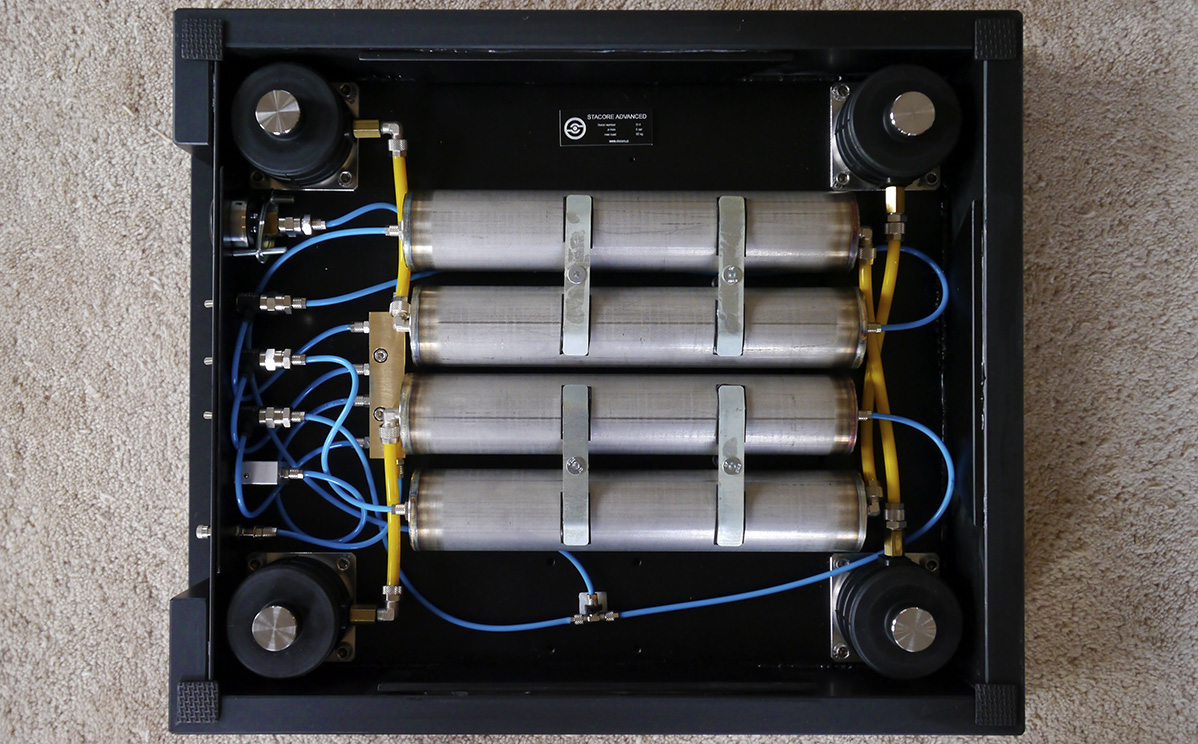
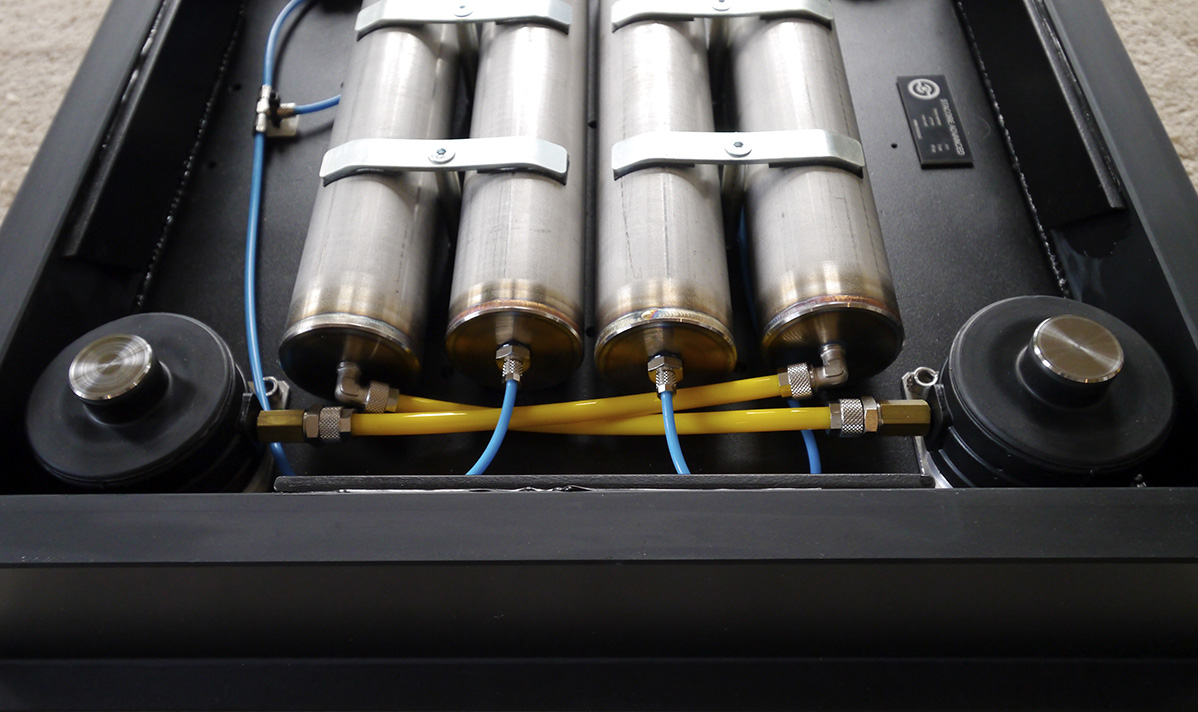
For some adult exposure, here are the brains of the operation with four compression chambers feeding matching corner elevators.
|
 |
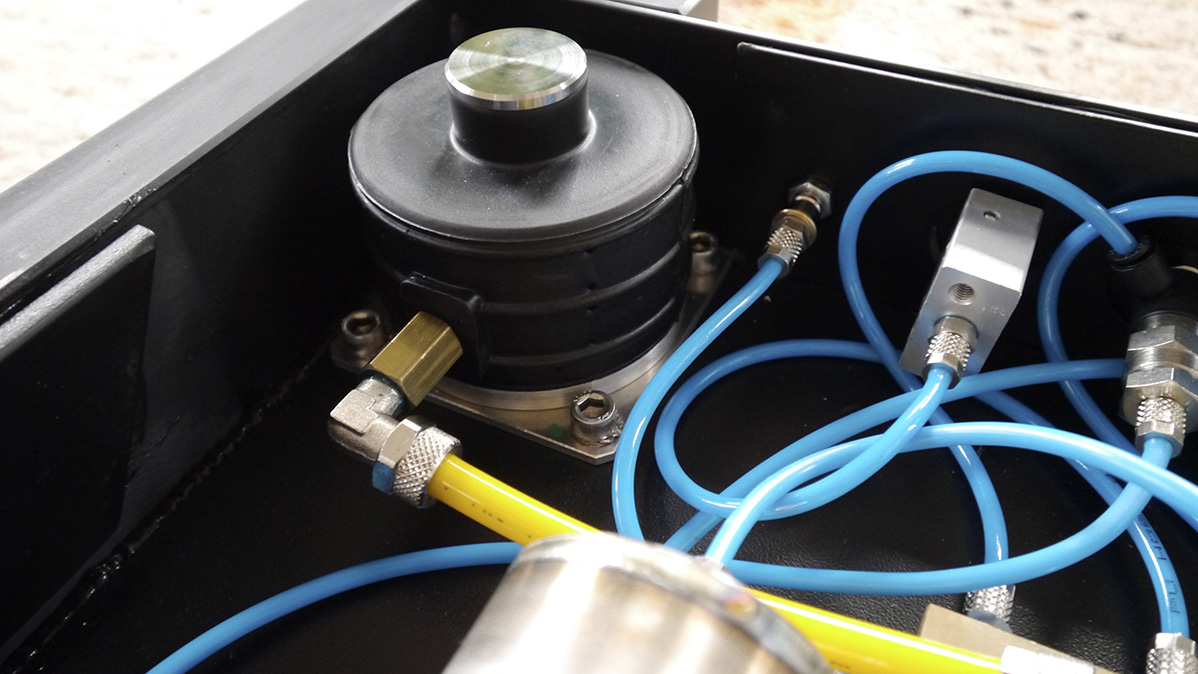
Here we see one of those elevators which does the heavy lifting to float your component on trapped pillows of compressed air which achieves the decoupled suspension.
|
 |
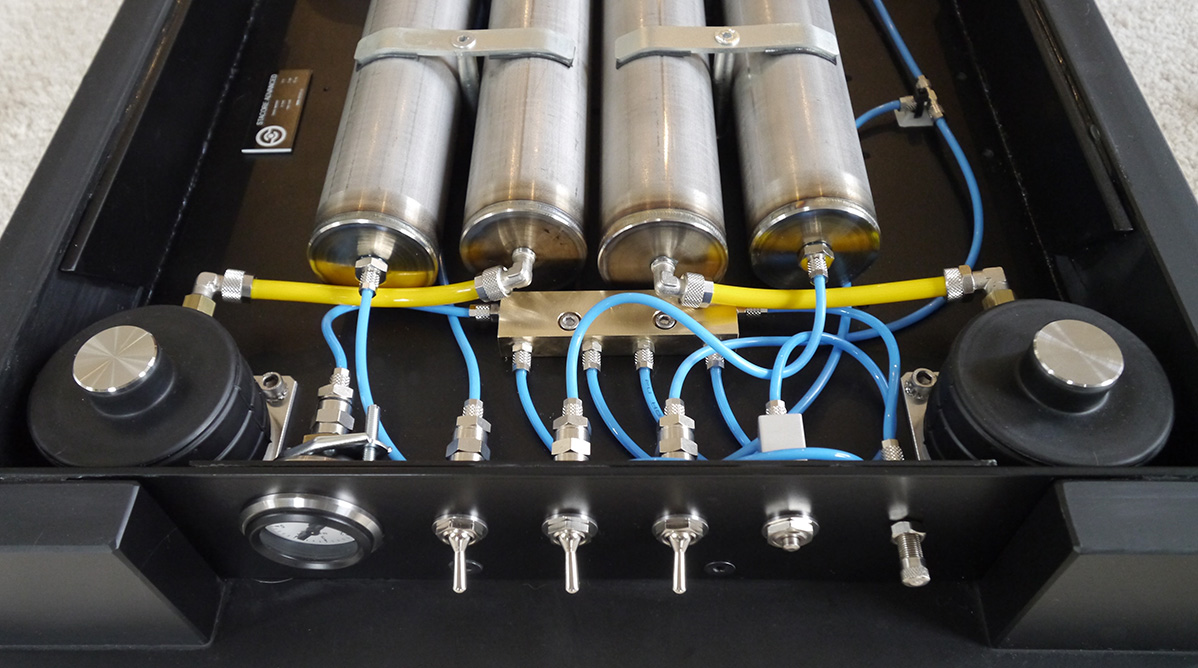
Still in downside up mode, we see the control end with the air intake feeding a distribution chamber which feeds the compressors, release valve, open/close toggles and pressure gauge with blue plumbing whilst higher-diameter yellow pipes connect the compressors to the corner lifts.
|
 |
And that's the extent of the mechanical assembly which at this point merely required being pressurized to a max 5 bar/72psi to create no more than 10mm elevation. Asking Jarek whether lower or higher pressure/elevation was sonically superior, "in theory, the lower the pressure the better because that lowers the resonant frequency of the platform. In practice, the vast majority of audio gear isn't sensitive to that except for cheap CDP and such which favour a stiff platform with high pressure. Usually however we recommend 3-5mm elevation as the default optimum." It goes without saying that the pressurized platform shouldn't be lifted up; and that it should be pressurized under load
|
 |
Getting pumped was easy. Unscrew intake cover, attach pump hose, flick the three toggles up for 'open', power up the pump, watch the pressure gauge and extent of physical elevation to remain within the safety tolerances. Power pump down, flick toggles down for 'close', disconnect feeder pipe, replace air-intake cover. Done.
|
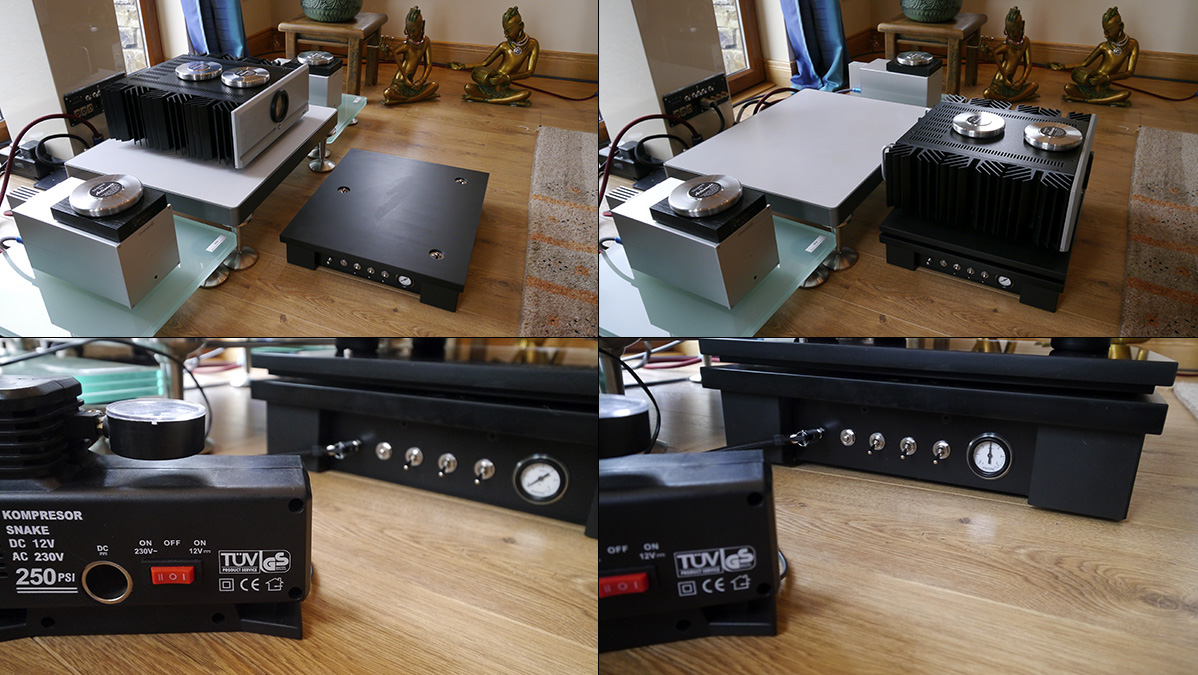 |
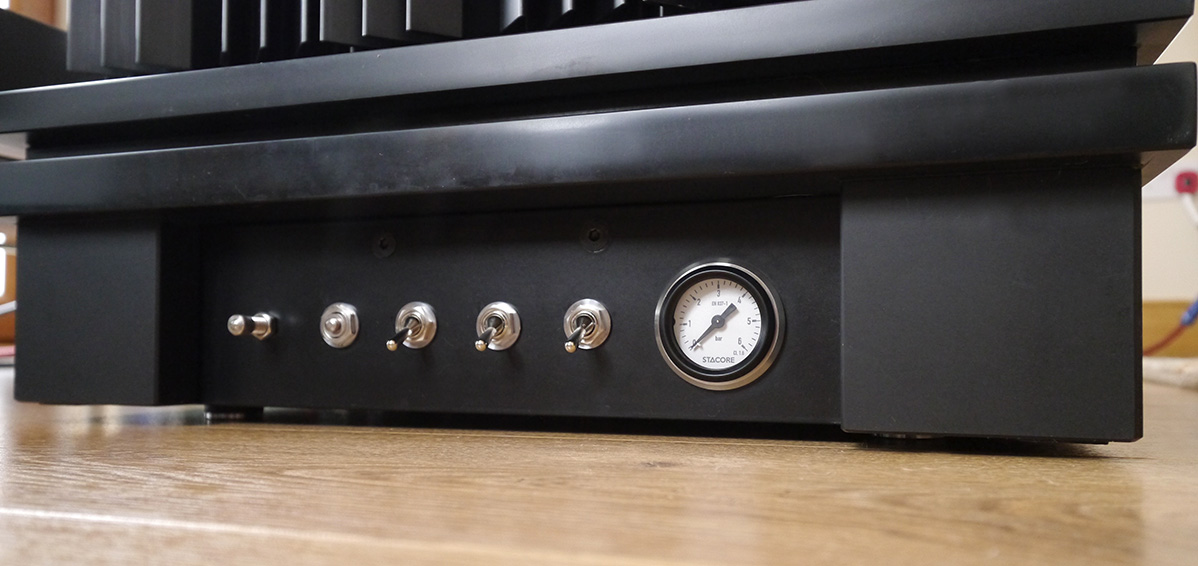
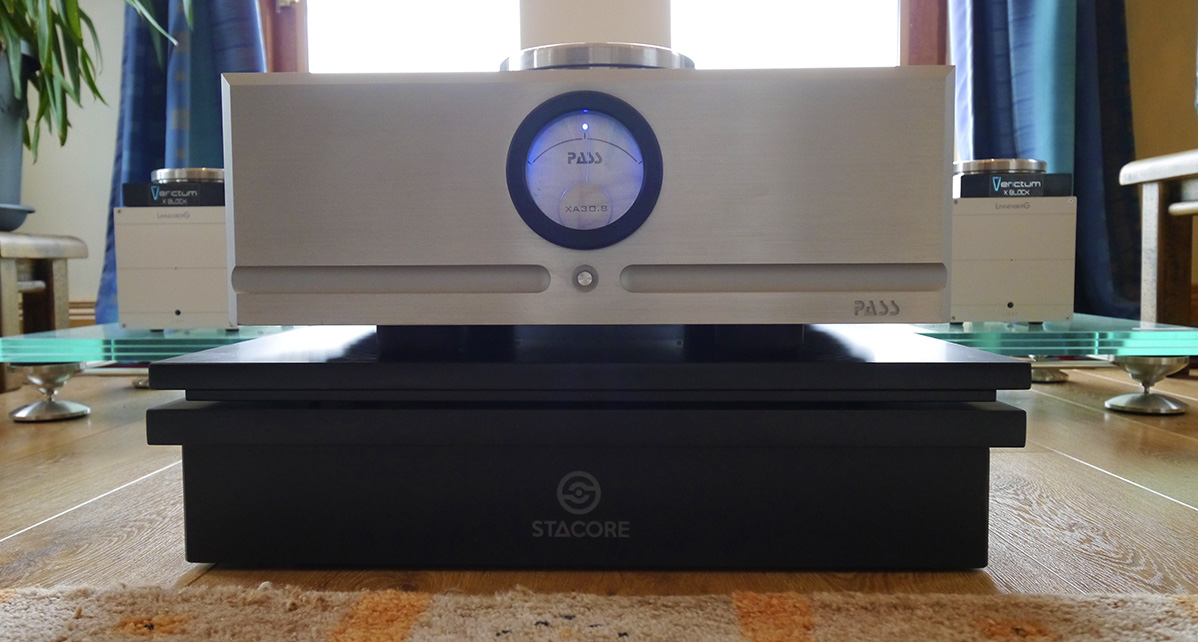
Here we see the extent of elevation achieved when the 250psi compressor hit 3 on the dial whilst the platform was loaded with the 88lbs Pass Labs XA-30.8. Once the pump disconnected, Stacore's meter returned to zero as shown.
|
 |
With my heavy artillery in place, lower back untweaked, it was time to lend a helping ear or two.
|
 |
|
 |
|

|

|