|
 |
|
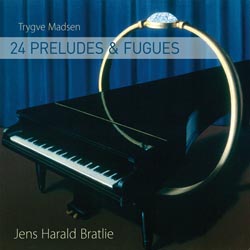
Album Title: Trygve Madsen - 24 Preludes & Fugues
Performer: Jens Harald Bratlie, piano
Label: 2L
Running time: CD 1 52'23'' / CD 2 49'56''
Recorded: Sofienberg Church Oslo, 2005
|
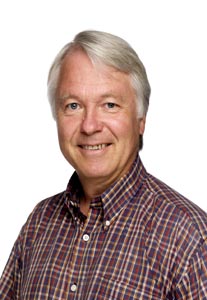
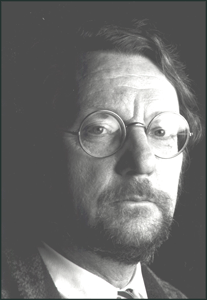
Trygve Madsen is a Norwegian classical composer who was born in 1940 as the son of a family of professional musicians. He began to play the piano at the age of six and started to write music at seven. He studied instrumental counterpoint and composition with the Norwegian composer Egil Hovland. He also studied piano with the concert pianist Ivar Johnsen. From 1969 – 1971, Madsen also studied at the Academy of Music and Fine Arts in Vienna.
Despite this very classical background and a deep influence of the serialism of the Second Viennese School, Trygve Madsen has revealed himself to be a very versatile composer with a touch of fantasy and an immodest interest in American Jazz.
|
|
 |
|
 |
Madsen’s creativity led him to compose a large canon including lieder, piano music, chamber music, opera, three symphonies and concertos for various solo instruments such as piano, oboe, clarinet, bassoon, horn, tuba and euphonium. For my personal musical tastes, fantasy is key in any composing activity. What would have been Mozart’s masterworks without the imaginative side of his exuberant personality? In matters of fantasy, Madsen seems to have been copiously blessed.
His 24 Preludes & Fugues can be considered one of the most extensive and versatile piano works ever released by a Norwegian.
They were composed between December 1995 and January 1996. The roots for his own suite are Bach's Well-Tempered Klavier and Shostakovich’s 24 Preludes & Fugues.
|
|
|
|
He probably dreamed of transcending these masterpieces by composing his own collection of preludes and fugues. Madsen put forth the notion of presenting the different musical keys and took inspiration from Kepler’s theory of the harmony of the spheres in his 1619 classic Harmonice Mundi - Harmony of the Worlds. That theory is based on the principle that planets and stars move according to mathematical equations, which correspond to musical notes and thus produce a celestial symphony.
Was it pure fantasy, were it audacious compositional ambitions? Undoubtedly both.
Pythagoras who is credited with originating the concept which Kepler developed further would be happy to know that anyone today can hear the music of the spheres without any particular efforts at abstraction.
The contrapuntal style of Madsen’s work is always obvious but remains allied to jazzy syncopations which imbue the final results with a lot of brightness. Mixing Bach with Shostakovich and adding swing, tango and dodecaphony is the main impression which these 24 preludes and fugues convey.
A fair summation of this piano work would include the freedom and exuberantly eclectic approaches of previous masterpieces. Madsen constantly plays with the different moods as the real inspiration behind the various musical styles that are available to the piano in the late 20th century. Obviously the main artistic interest of Madsen’s work resides in this juxtaposition between preludes and fugues of such stylistic variety.
Among those and despite their overall equality, I had some personal weakness for the "F# major Prelude" and its Debussian roots. I also loved very much the jazzy cues and timing delivered by the "A minor Prelude". Bratlie also beautifully captured the "G-major" tango reminiscence with its strong Spanish influences. Another splendid piece is the "D minor Prelude" with its lively rhythms, colorful harmonies and infectious Latin Jazz vibe.
|
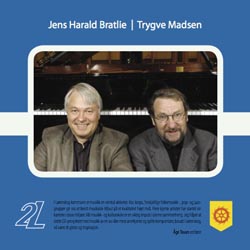 |
As is the norm for 2L, the recording quality is excellent and presents a more intimate acoustic which fits this kind of solo concertizing well. And once again too, 2L selected a very difficult performance which aims at various sensibilities with the same recording. Many classical music lovers might deplore the lack of depth in the Bach and Shostakovich references while their Jazz equivalents might have appreciated more improvisational developments along the Jacques Loussier precedents. As far I am concerned, I highly enjoyed this double album and clearly recommend it to anyone who desires to discover new musical perspectives in contemporary serious piano works.

|
|
 |
|