Code: proprietary. PureMusic's setup window identified the
COS D2 by name, not as a generic XMOS/Amanero/hiFace USB transceiver. It showed up 384kHz and hog mode compliance. Where MQA marketeers paint their digital filter as best, more than one digital designer who laboured hard to write his own disagrees. With custom code originally written for the D1, the D2 too prefers to run its own. That omits the silly blue light and also bypasses what BurrBrown/TI use on the D2's two chips.
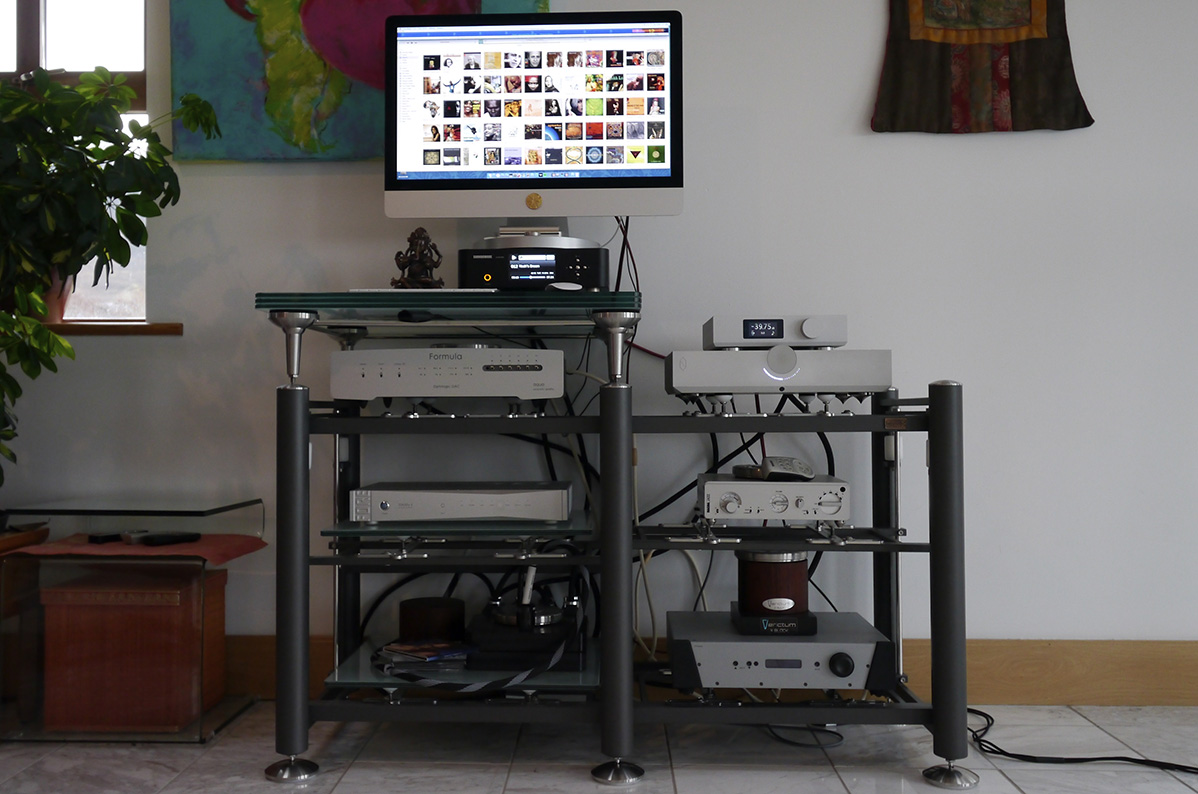
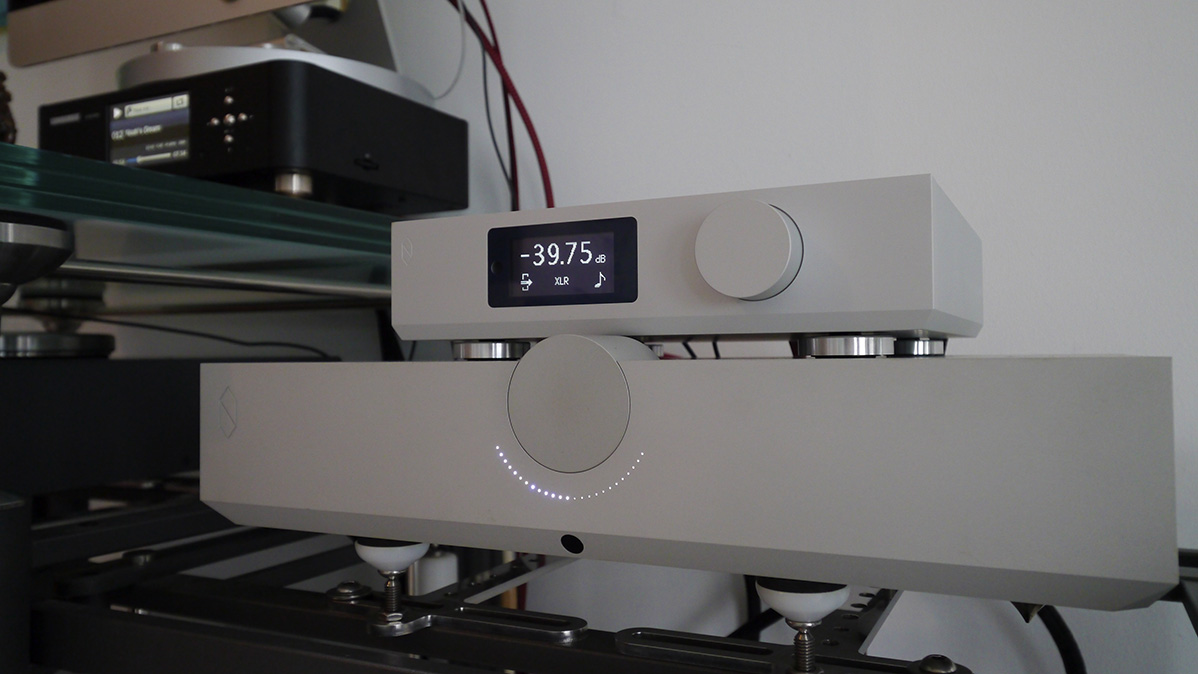
As a happy owner of the D1, it was obviously obligatory to instigate she-said-he-said sibling dispute. For the full measure, it meant balanced direct drive into our LinnenberG Allegro monos fronting our white Audio Physic Codex. With its ¼dB display, smaller youngster immediately upstaged bigger elder on precisely repeatable levels. Here the D1's stylish white LED smile plays it like a one-handed watch. It shows approximate time in 5-minute increments. The D2 was the RF-controlled digital watch with a 1/10
th of a second display. As a purely functional difference, it as yet said nothing of sound. In preamp not fixed-gain DAC mode, it did say that the D2 was rather more purpose designed. Being smaller and far less costly too, the D2 entered this contest with a 3-point advantage. I felt that the D1 would have to sonically dominate in a quite obvious way to redress that balance.
Phrase: uncommon. As the Irish Times writer Sergei Aksyonov put it in a recent political essay, "...apricot blossom already dusts the sun-dappled field
s of Bakhchisarai but Safinar Dzhemilev is in no mood to savour springtime in the ancient capital." From this we pick the poetic turn of phrase
sun dappled. Very different from the previously reviewed full-tube
HQ9038 DAC, the D2-fronted system sounded light-filled and lithe. Fully elucidated yet tangibly elegant, its treatment of the treble anchored the reading in sun light. Usually for 'anchor' we call out earthiness and potent bass because the visual connotes a downward force whose reference point is well below the surface. By the same logic, we call the opposite presentation suspended or floating. After all, a top-down reference point is above the head. As my best attempt to describe the D2's primary effect, I have cross-referenced anchor with light. This counters suspicious notions that it felt lightweight or unduly ephemeral and wispy as might be expected for such perspectives.