|
|
|
|
The last thing I expected to end up doing with these small speakers was feverishly selecting favourite bass players and bottom-end test discs. Yet almost subconsciously, that’s what happened. Following Weber came Bernard Edwards, Marcus Miller and Jaco Pastorius. Then for some synth variety, Michael Jackson’s Bad and Kraftwerk’s Minimum-Maximum. Okay, it would be crazy to pretend that these speakers are capable of flooding a big space with sound but provided your listening space is about the size of the average British or Japanese living room, the quality of the bass output, if not the outright reach, will realign your expectations. Listen to Edward’s playing on Carly Simon’s Why and you will notice two things: firstly, the rest of the instrumentation doesn’t asthmatically compress upon the bass’ entry; and secondly, that bass sound punches through with such impressive linearity, it’s almost like a mini nail gun, apparently beginning its journey at least another 10cm further back from the speaker’s rear. And Jackson’s "The Way You Make Me Feel" and "Liberian Girl" offered the guiltiest of sugar rushes, with every production trick in the book underpinned by a startlingly convincing bottom end - powerful, transparent and textured in equal measure. Greatness has a nasty habit of exposing weakness elsewhere but on this occasion, the low end remained integrated within a well-balanced soundscape, the final result being that if you closed your eyes, you might have imagined that the speakers sitting in front of you were a pair of modestly-sized floorstanders.
|
|
|
|
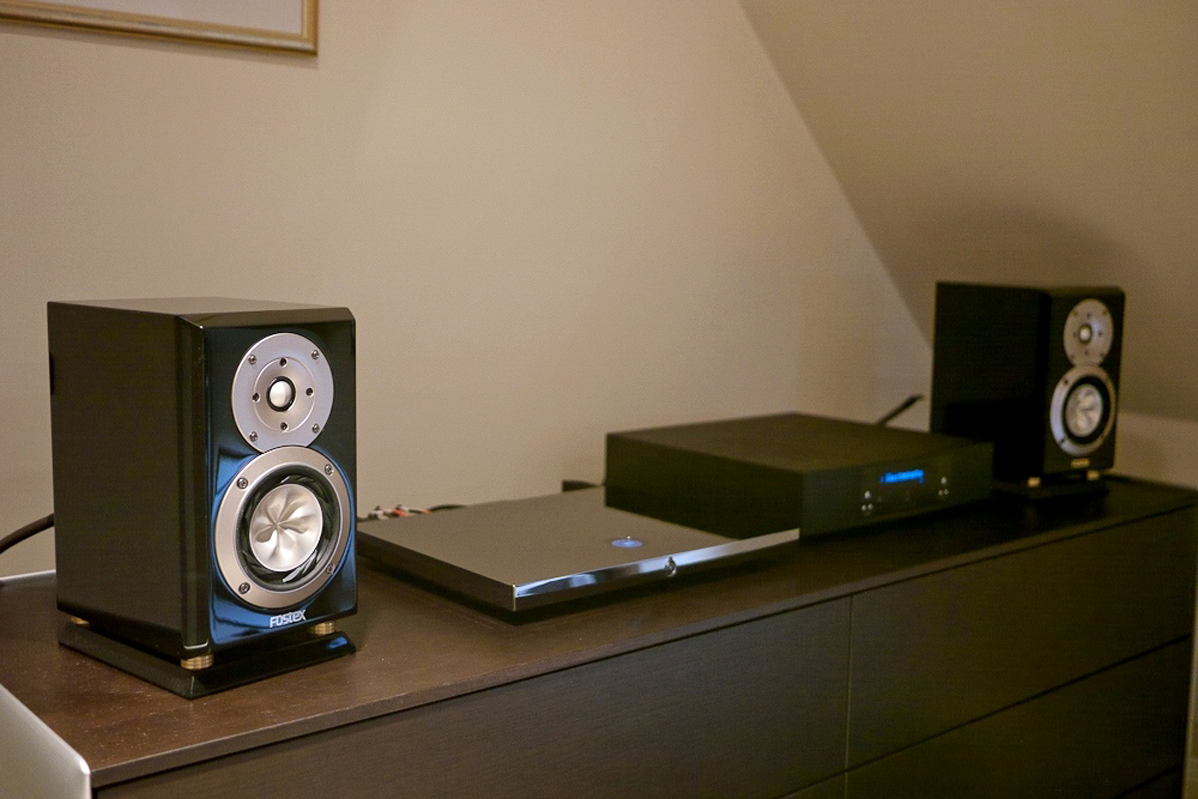 |
And that brings us to part two of this particular party piece: they don’t require an expensive weighty stand to showcase this talent. It’s an inescapable fact that standmounters can end up occupying pretty much the same cubic space as their carpet-dwelling brethren. Here the GX really don’t require a stand at all. Even though rear-ported, they work brilliantly in the sideboard/bookshelf or desktop role, providing you can put a very modest distance (5cm+) between them and the wall. And I could also see them finding a happy home wall-mounted on either side of the kind of 55" flat screen TV that most Brits do somehow manage to make space for. Do try to ensure though that regardless of precise usage the tweeters end up as close to ear-level as possible, as imaging really locks in if care is taken here.
|
|
|
|
|
 |
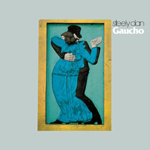
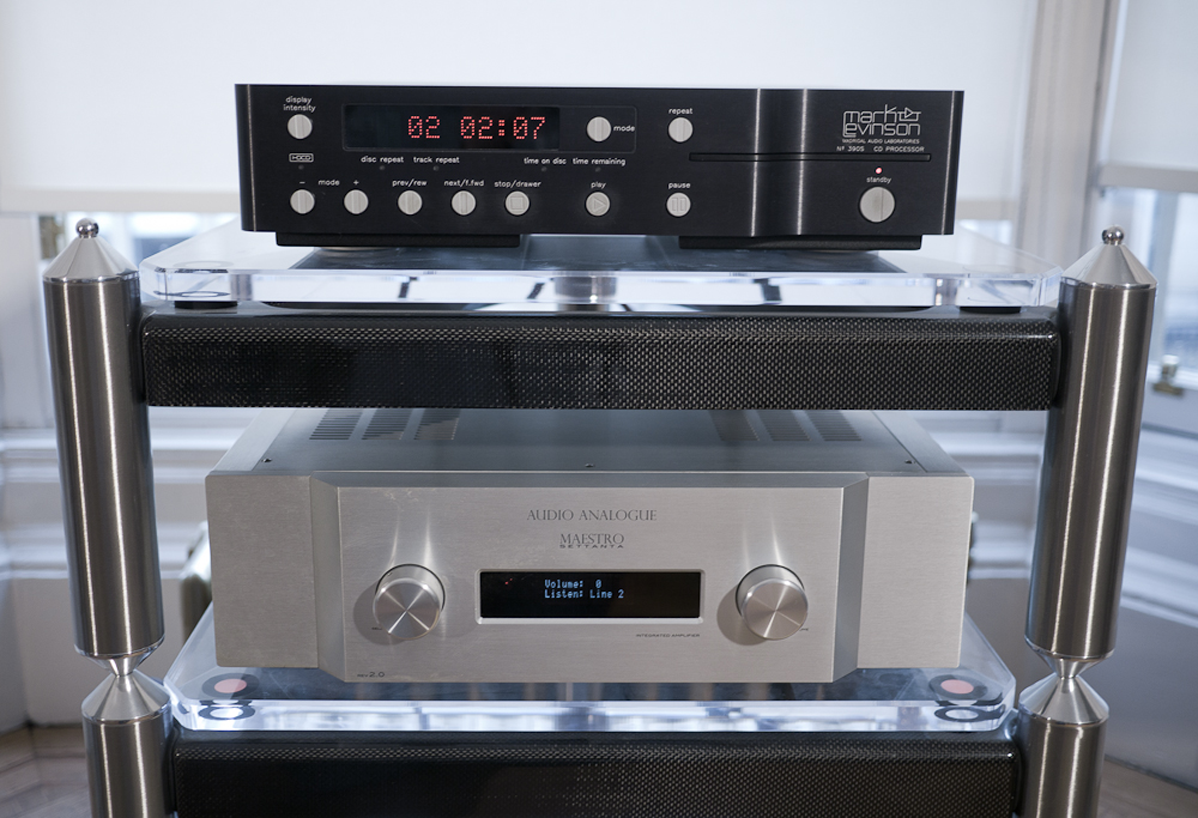
Versus KEF. KEF’s LS50 is about as close as we get in the hifi firmament to a smash hit. So when an audiophile friend offered me the opportunity to compare and contrast them with their Japanese competition, I grabbed it. The rather lovely system would consist of a QNAP TS122 NAS drive, Linn Majik DSM (amplifier disabled) and Devialet 200 (amp + onboard DAC). Our listening tests intriguingly included two recordings I wasn’t familiar with: Judith Owen’s Ebb and Flow and Rejoice the Lord is King!, featuring James O’Donnell conducting the Westminster Abbey Choir. Plus one record I admit to being a little over familiar with - two versions of Gaucho by Steely Dan (hi-res & Redbook). First impressions of the KEFs left me in absolutely no doubt as to why their appeal has been so apparently universal. Big and brassy, the striking overall coherence of their Uni-Q point-sourced driver array reminded me of certain early 90’s designs I had loved from the likes of JBL, Revel and ProAc; back indeed when some might argue a speaker designer’s main aim was the elicitation of simple listener involvement rather than a forensic quest to unearth ever more detail.
I immediately understood why many who had grown disillusioned with the hobby have been tempted back by them, especially with that price tag of £800. |
|
|
| ______________________________________________________________________________________________________________________________________________________ |
*And allow me one brief detour about Devialet. The contrarian in me would have been secretly sated to have found something to fault with a product that thus far has garnered nothing but universal praise from a multitude of experienced reviewers. But no, the all-conquering Parisians have not only reached the shores of Caledonia but can also chalk up yet another convert! Notably clear and authoritative, with an expressively fluid musicality, it arrives minus any of the pratfalls that one might prejudicially suspect of such an elegant solution. Both amp and DAC performed beautifully and that remote control is almost worth the price of admission alone. For as long as I can recall, audiophiles and industry figures alike have bemoaned a certain lack of collective vision—professionalism even—that too often besets our best efforts to go forth and multiply. So it's a pleasure, a relief almost, to recognise a company that can rightly boast a killer combination of engineering chops, marketing nous and monetary backing required to continue to shake the hifi tree for many years to come. Bravo.
|
 |
|
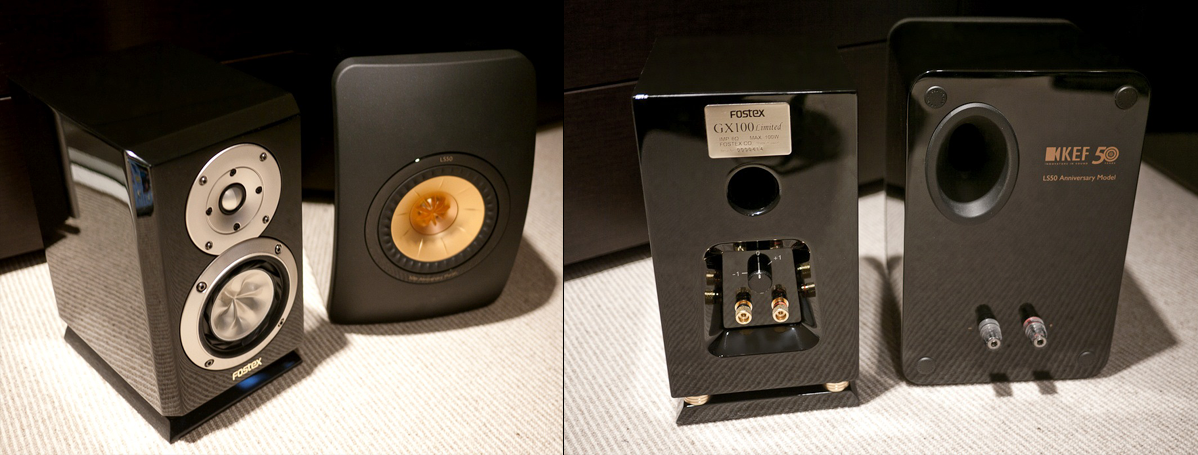
| Dynamically their bigger cabinets (30x28x20cm) meant that in the region Jonathan Valin likes to refer as the power zone, the LS50 projected more forcefully into the listening room to display very cinematic soundstaging. Judith Owen’s voice sounded altogether bigger and overall the presentation had an impressively architectural feel normally more associated with multi-driver designs. And these qualities were possibly even more apparent on the choral selection, an amazing recording of massed choir which sounded completely unrestrained even at high volumes. In fact a generous, smooth and well-framed sound was the LS50’s recurring sonic signature irrespective of genre.
And initially the Fostex’s response to all this abundance seemed a little demure because in terms of overall scale, the GX100 Ltd did sound smaller. But they also exposed the fact that the Brits were subtly bulking up things with more of their own sonic signature. With the LS50, Judith Owen’s voice excited a degree of cabinet interaction which added a certain thickening chestiness. In contrast, this type of colouration simply wasn’t there with the Fostex. And this brought benefits all over the spectrum. On Gaucho for instance, Walter Becker’s bass guitar was texturally much more nuanced and more transparent too. Even Jeff Porcaro’s bass drum displayed more individual character. |
|
|
|
 |
The midband impressed with both designs, the GX's being a little cooler and leaner, the KEF’s less delicately drafted. But my listening companion though that it was the top-end of the GX100 Ltd which was most notably superior, bringing to mind the Beryllium unit of Focal’s Diablo, a design we are both familiar with. And he was right. Cymbals and hi-hats revealed the KEFs to be subtly rolled off in comparison to the more filigreed sound projected by the magnesium units. In short, the GX were the more sophisticated design, their extra definition serving not only the instruments themselves but also defining more clearly the acoustic environments in which they were recorded. All the boogie-factor and bounce of the KEFs came at the expense of a homogenizing effect which denuded different instruments and recordings of a degree of uniqueness. Voices actually ended up sounding a little too big, the overall delivery just a little bit hifi, through the bronzed Brits. Maybe it’s Fostex’s pro/studio background that entails how their offering has greater neutrality. Thankfully they too can entertain, being just a smidgen more measured in their delivery. So although the entertaining swagger of the Brits might make them quickest off the line in an A/B drag race, I’m convinced it’s the GX which would prove the more giving long-term partner, offering the promise of a deeper relationship rather than a short-term squeeze.
|
|
|

|

|
|